
Home / Services / Company knowledge base
Services · Company knowledge base
A knowledge base for what your organisation already knows.
We help organisations design and implement a knowledge base that connects documents, project records and decisions with the context behind them, using infrastructure and operating boundaries agreed with the client. This is a proposed implementation service; no managed service operates today.
An implementation service, scoped by engagement — not a product you sign up for.
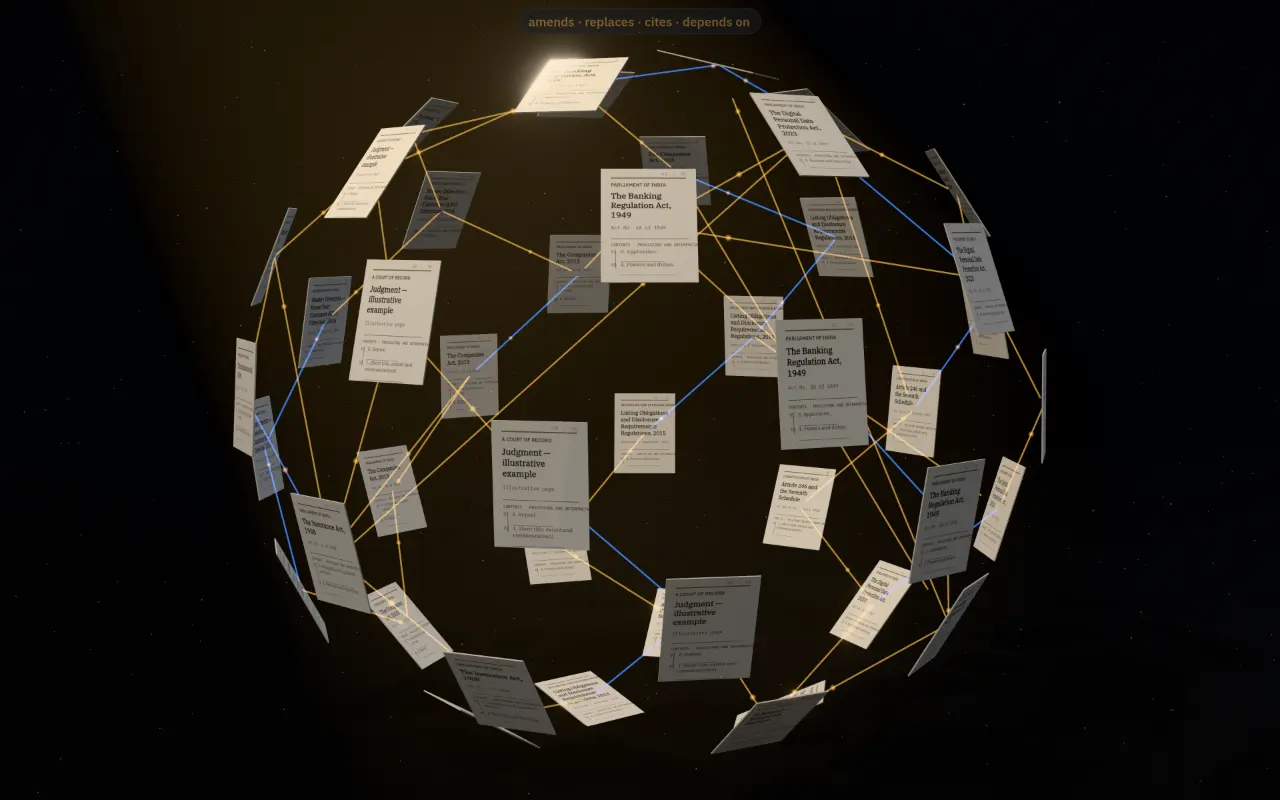
How an engagement runs
Engagements can cover source assessment, structured indexing, cited search, access controls and ongoing maintenance. We use the smallest qualified components for the job rather than a fixed stack, reusing our own Project KB and Company OS patterns for source identity, indexing and controlled workflow rather than starting over.
- Assessment — a source catalogue, a permissions and ownership map, sample quality findings and a pilot acceptance plan
- Qualification — sign-in and source permissions enforced, and denial tested across caches, search, graph links, answers and logs
- Implementation pilot — selected sources and users, versioned ingestion, access-tested search, missing or old data shown, query quality measured
- Operation or handover — an agreed refresh cadence, incident ownership, deletion and export, recovery tests and a runbook, scoped to actual capacity
No sensitive data is admitted before qualification passes. Price and support commitments follow the actual scope and capacity; none is set here.
—
Optional building blocks, not prerequisites
Patra, Curator/BanyanGraph, Karta and ChangeProof can each contribute a bounded capability inside an engagement — document preparation, approved external context, coding or maintenance execution under a separate authority grant, and obligation-to-impact tracing. None is required to start, and none is bundled in by default.
—
What this is not yet
There is no managed company knowledge base service operating today, and no sensitive client data is accepted before an engagement is qualified. User authentication, source permissions, tenant separation, deletion propagation and prompt-injection resistance are tested for the actual engagement before any customer data is handled.
—
Company OS, kept separate
Selected Company OS patterns — authority, controlled workflows, change records and ownership — inform how we run an engagement. Our own identities, secrets and company-wide control plane are never deployed into a customer account, and Company OS itself remains an internal system we use to run the company, not a released product.
Start with an assessment.
Tell us which sources matter and who may see them. An engagement begins by mapping both, and no sensitive data is admitted until access has been tested.